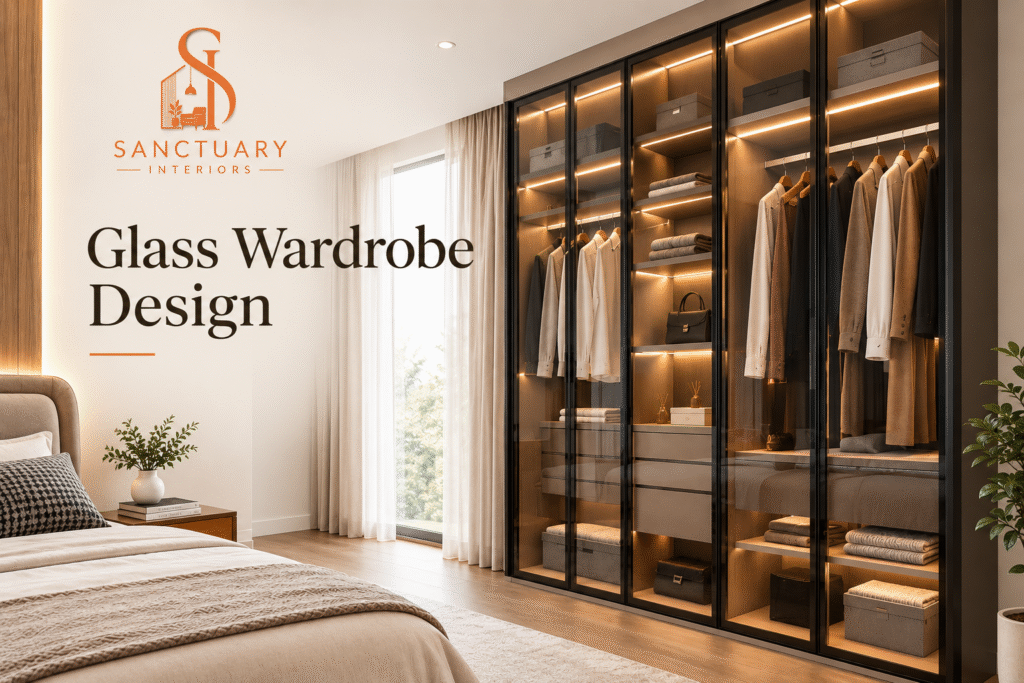

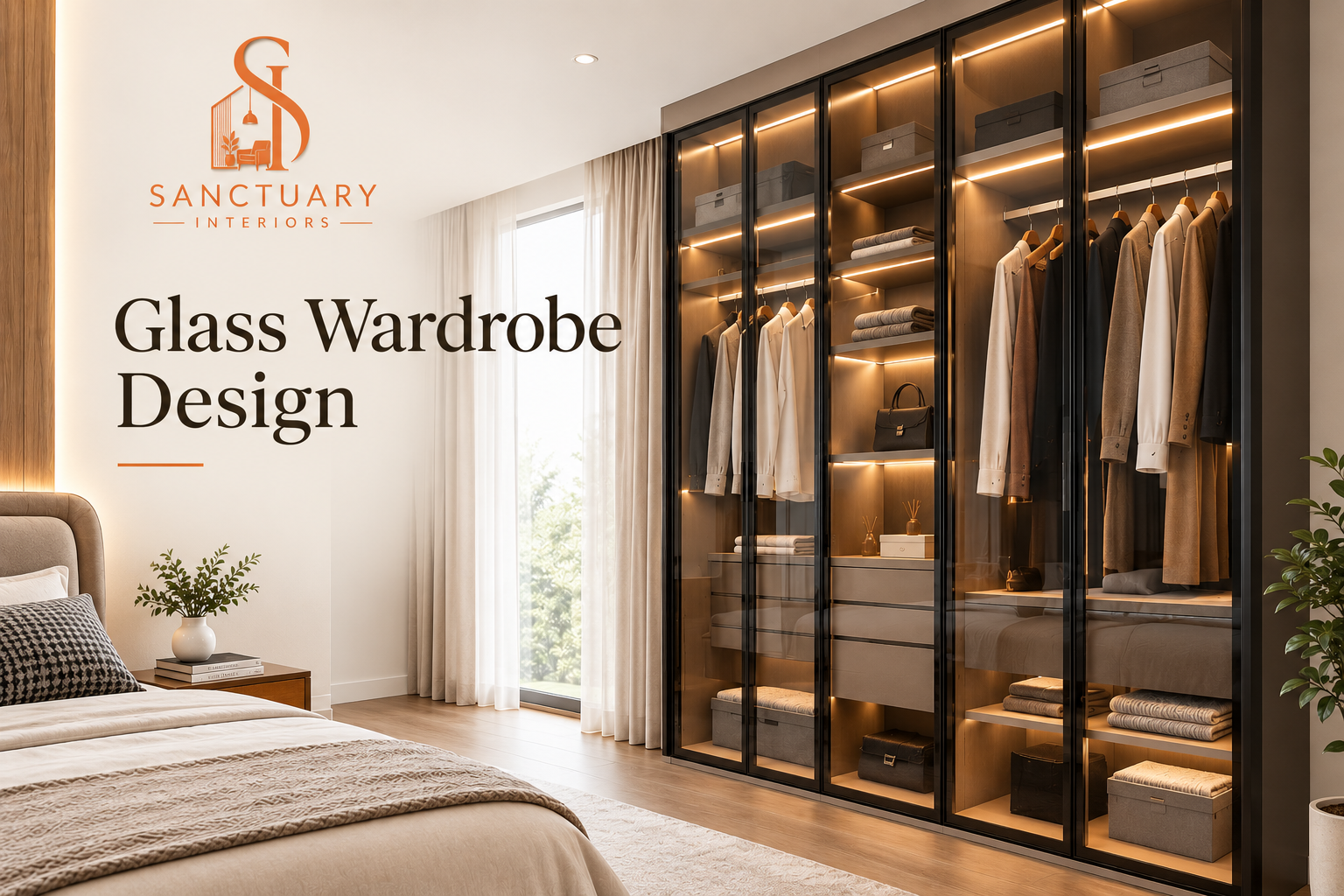
If you have narrowed your search down to a glass wardrobe design, you are probably past the inspiration stage and into the decision stage. You know glass adds light, reflects space and looks far more premium than plain laminate shutters. What you need now is the practical information: which glass type actually holds up in daily use, what a realistic budget looks like, and what questions to ask a vendor before you sign a work order. This guide covers all of that, drawn from how we actually specify and install wardrobes for our clients in Hyderabad.
Why a Glass Wardrobe Design Is Worth the Investment
A wardrobe is one of the largest visible surfaces in a bedroom, often bigger than the bed wall itself. Laminate and plywood shutters do the job, but they read as furniture. Glass shutters read as architecture. They catch ambient light instead of absorbing it, which matters in Indian bedrooms where windows are frequently small and natural light is limited. A well specified glass wardrobe design also ages better than laminate, since glass does not chip, peel or show scratch marks the way laminate edges do after a few years of daily use.
The trade-off is cost and handling. Glass shutters cost more than laminate, they need to be ordered to precise measurements since glass cannot be trimmed on site, and the wrong glass type can be a genuine safety risk in a bedroom used by children or elderly family members. None of that is a reason to avoid glass. It is a reason to understand the options before you commit to one.
Types of Glass Used in Wardrobe Design
Not all glass performs the same way, and the terminology gets thrown around loosely by vendors. Here is what each type actually means for your bedroom.
Toughened Glass
Toughened, or tempered, glass is heat treated so it becomes roughly four to five times stronger than ordinary annealed glass of the same thickness. If it does break under impact, it crumbles into small blunt granules instead of long shards, which is the entire reason it is specified for furniture that sits close to where people sleep and move around barefoot. Glass manufacturer AIS Glass explains that toughened glass does not break into shards or spikes under severe impact, and instead crumbles into small, blunt pieces that significantly cut the risk of injury, which is exactly the behaviour you want in a wardrobe shutter a child might bump into. In India, this category is governed by the BIS standard IS 2553, and any vendor supplying wardrobe glass should be able to show you a certificate against it rather than just a verbal assurance.
Laminated Glass
Laminated glass sandwiches a plastic interlayer, usually PVB, between two glass sheets. If it cracks, the interlayer holds the fragments together instead of letting them fall away, so you get a cracked but intact panel rather than a hole with glass on the floor. Global manufacturer Saint-Gobain notes that laminated glass provides this retention because the interlayer stays bonded to both panes even after breakage, keeping the sheet largely in place. This makes laminated glass a strong choice for larger wardrobe panels or walk-in wardrobe walls, where a bigger surface area means a slightly higher chance of accidental impact over the wardrobe’s lifetime.
Frosted and Sandblasted Glass
Frosted glass is treated to scatter light rather than transmit a clear image, so you get the glow of glass without a direct view of what is stored inside. This is the most requested finish for couples and shared bedrooms, since it solves the practical problem of an untidy wardrobe interior being on permanent display. Frosted panels also hide fingerprints and light scratches better than clear glass, which matters over years of daily opening and closing.
Lacquered Glass
Lacquered glass has a solid colour coating fused to the back of the panel, giving a glossy, opaque finish in any shade you choose. It behaves like a coloured laminate visually but has the reflective depth of glass, and it is easier to wipe clean than a textured laminate finish since there are no grooves for dust to settle into. This is usually the pick for homeowners who want a glass wardrobe design that matches a specific colour scheme rather than a neutral, transparent look.
Mirrored Glass
Mirror shutters on a wardrobe do double duty as a full length mirror and a light amplifier, which is why they remain one of the most requested wardrobe glass door design choices for compact bedrooms. The reflection effectively doubles the perceived depth of the room. The trade-off is maintenance, since mirrored surfaces show dust and smudges more visibly than frosted or lacquered glass, and placement needs a little thought, which we cover in the Vastu section below.
Wardrobe Glass Door Design Options for Every Bedroom
Once you have picked a glass type, the next decision is how the doors operate. This changes both the cost and how much floor clearance the wardrobe needs.
Sliding Glass Wardrobe Doors
Sliding shutters run on an overhead or floor track and need zero swing clearance, which makes them the default choice for Indian bedrooms where floor space is tight. A sliding wardrobe glass door design also allows for larger single panels, since there is no hinge weight limit the way there is with a swing door, so you can run floor to ceiling glass in one continuous sheet for a cleaner look.
Hinged Glass Wardrobe Shutters
Hinged doors need swing clearance but give full, unobstructed access to every shelf and hanging rod at once, which some homeowners find more practical for daily dressing. Glass panels on hinged shutters are usually kept smaller than sliding panels to keep the hinge load manageable, so this format often uses a grid of smaller glass sections rather than one large sheet.
Walk-In Wardrobes with Glass Panels
For larger bedrooms, a walk-in wardrobe with glass fronted units turns storage into a dedicated dressing space. Internal glass shelving, glass fronted drawers and a full length mirror panel are common additions here, and because walk-ins are viewed from multiple angles, the finish consistency across the glass panels matters more than in a standard shutter wardrobe. This is a category where working with a designer who understands the full room, not just the wardrobe, pays off, and it is a natural extension of a well planned bedroom design.
Glass Wardrobe Designs for Bedroom Spaces of Every Size
The right glass wardrobe design changes significantly based on how much room you are working with, and a design that looks stunning in a large master suite can overwhelm a compact bedroom.
Small and Compact Bedrooms
In a smaller room, frosted or mirrored sliding shutters with a slim aluminium frame are the safer bet. Slim frames reduce visual bulk, mirrors amplify light, and sliding tracks avoid eating into the limited floor clearance a hinged door would need. We have written in more depth about planning a bedroom around these constraints in our guide to bedroom design, which is worth reading alongside this one if you are working with a smaller footprint.
Master Bedrooms and Walk-In Closets
In larger bedrooms, you have more freedom to mix finishes. A common approach is clear or lightly tinted toughened glass on the main shutters, paired with a lacquered glass accent panel or a dedicated mirror section near the dressing area. Larger rooms can also support bolder colour choices in lacquered glass, since there is enough surrounding space to keep the look balanced rather than overwhelming.
Safety Standards You Should Ask About Before You Buy
This is the part of the buying decision most homeowners skip, and it is the one that matters most once the wardrobe is installed in a room people sleep in every night. Ask any vendor which IS 2553 grade their glass is certified to, and whether the certification covers the specific thickness you are ordering, since testing requirements vary by thickness under the standard. The Bureau of Indian Standards’ implementation guidelines for the revised IS 2553 Part 1 lay out updated requirements for flatness, resistance to human impact and edge working on toughened safety glass, and a legitimate manufacturer will reference these tests directly rather than giving you a vague “it’s tempered glass” answer. If a vendor cannot produce a batch certificate or test report on request, treat that as a red flag, not a minor formality.
Cost Factors That Influence Your Glass Wardrobe Budget
Glass wardrobe pricing is driven by four variables, and understanding them helps you compare quotes properly instead of just picking the lowest number. Glass type is the biggest factor, since toughened glass generally costs less than laminated glass of comparable thickness, and lacquered or mirrored finishes add a further premium over clear glass. Thickness matters too, since larger panels need thicker glass to stay rigid, which increases both material cost and the cost of weight bearing hardware. Frame material changes the price band as well, with aluminium frames sitting in the mid range and handle-less, frameless designs typically costing more because of the precision hardware needed to hang unsupported glass safely. Finally, internal fittings, drawers, pull out trays, jewellery organisers and lighting, are usually quoted separately from the shutters themselves, so ask for an itemised quote rather than one lump figure. That is the only way to know what you are actually paying for glass versus paying for interior fittings.
Vastu Considerations for Glass and Mirror Wardrobes
Many of our clients ask about Vastu specifically when a mirror is involved, since mirror placement carries more weight in Vastu guidance than plain glass does. The general principle repeated across Vastu sources is straightforward. As Housing.com explains, mirrors are generally not recommended in a position where they reflect the bed, since this is believed to disturb sleep and reflect negative energy back to the occupants. In practice, this means positioning a mirrored wardrobe on a side wall rather than the wall directly facing the foot of the bed, or choosing a sliding mirror panel that can be closed off at night if the layout of the room does not give you another option. If Vastu compliance is a firm requirement for your household, raise it with your designer at the layout stage, not after the wardrobe position has already been finalised on the drawing.
Maintenance and Care for Glass Wardrobe Shutters
Glass wardrobes are lower maintenance than most homeowners expect, but they are not zero maintenance. Clear and mirrored panels show fingerprints and dust more readily than laminate, so a quick wipe with a microfibre cloth and a standard glass cleaner every few days keeps them looking sharp. Avoid ammonia based cleaners on any lacquered or coloured glass, since repeated use can dull the coating over time. Track mounted sliding doors need the channel cleared of dust periodically to keep the glide smooth, and it is worth checking the hardware, rollers and handles, every six months or so, since these wear out well before the glass itself ever does. Design publication Beautiful Homes by Asian Paints makes a similar point about mirrored and lacquered glass finishes being genuinely easy to clean and maintain over the life of the wardrobe, provided the right cleaning agents are used.
Common Mistakes Homeowners Make with Glass Wardrobes
The most frequent mistake is choosing glass purely on appearance in a showroom sample and skipping the certification conversation entirely. A second common mistake is ordering clear glass for a shared or guest bedroom without thinking through privacy, only to regret it once the wardrobe is full of visible clutter. A third is underestimating installation precision, since glass cannot be trimmed on site the way plywood can, so a measurement error means a re-order and a delay, not a quick on-site fix. Working with a designer who measures the space properly before glass is cut removes this risk almost entirely.
Why Choose Sanctuary Interiors for Your Glass Wardrobe Design
We specify wardrobe glass the same way we specify every other material in a home, against certification, not just appearance. Our custom wardrobe service covers toughened, laminated, frosted, lacquered and mirrored glass options, built to your bedroom’s exact dimensions with in-house execution from design to installation, so there is no handoff between a design team and a separate fabricator that leaves gaps in accountability. You can see the range of finishes and layouts we have delivered across our completed projects, and if you already have a sense of the bedroom you are designing around, our guide to planning a bedroom design is a useful companion piece to this one.
If you are ready to move from research to a firm quote, the next step is a site visit where we measure the space, walk you through glass samples in person, and give you an itemised cost breakdown rather than a single bundled number. You can book a free consultation and we will get back to you with a slot within a day.
Frequently Asked Questions
Is glass safe for a wardrobe in a bedroom used by children?
Yes, provided it is toughened glass certified to IS 2553. Toughened glass breaks into small blunt granules rather than sharp shards, which is why it is the standard specification for furniture in homes with children. Avoid ordinary annealed glass, which breaks into dangerous sharp fragments and should never be used on wardrobe shutters.
What is the difference between toughened and laminated glass for wardrobes?
Toughened glass is stronger and more impact resistant, and breaks safely into small granules if it does fail. Laminated glass has a plastic interlayer that holds cracked glass together instead of letting it fall apart, which makes it a better choice for very large panels or walk-in wardrobe walls where a bigger surface is exposed to daily contact.
How much does a glass wardrobe design typically cost compared to laminate?
Glass shutters generally cost more than laminate shutters of the same size, with the exact difference depending on glass type, thickness, frame material and whether you choose a frameless design. The most accurate way to compare is an itemised quote that separates glass, frame and internal fittings, rather than a single bundled price.
Can I install a full glass wardrobe if my bedroom is small?
Yes, and it is often a good fit. Frosted or mirrored sliding shutters with a slim frame reduce visual bulk and reflect light, which makes a compact room feel larger rather than more cramped. Hinged doors are generally better suited to bigger rooms where swing clearance is not an issue.
Does a mirrored wardrobe door affect Vastu in the bedroom?
Vastu guidance generally advises against a mirror that directly reflects the bed. If your wardrobe placement means the mirror would face the bed, options include repositioning the wardrobe to a side wall, choosing a sliding panel that can be closed at night, or opting for frosted or lacquered glass instead of a mirror finish.
How do I clean and maintain glass wardrobe shutters?
Wipe clear and mirrored glass regularly with a microfibre cloth and a standard glass cleaner to prevent fingerprint build up. Avoid ammonia based cleaners on lacquered or coloured glass, since they can dull the coating over time. Check sliding tracks and hardware every six months to keep the doors gliding smoothly.